
Rest easy.
Breathe freely.
Custom oral appliance therapy for snoring and sleep apnea. The quiet, comfortable, mask-free alternative to CPAP, with Dr. Paige Lester.
- No mask, no hose, no noise
- Sleep test from home
- Insurance assistance
- AADSM memberAmerican Academy of Dental Sleep Medicine
- NYU College of DentistryDDS, plus BS & MS, University of Alabama
- Home sleep testingThrough our Rest Assured service
- Caring since 2002A division of Healthy Smiles of Birmingham
Better sleep begins with the right answer.
Whether it is your snoring, your CPAP or a nagging feeling that something is wrong, we will help you find your way.
Millions of people are tired, and don’t know why.
Obstructive sleep apnea quietly interrupts your breathing all night. It has been linked to high blood pressure, heart disease, stroke, diabetes and drowsy driving, yet most people who have it have never been diagnosed.
U.S. adults are estimated to have obstructive sleep apnea.
of cases are estimated to go undiagnosed and untreated.
of people prescribed CPAP do not use it as often as recommended.
1. Frost & Sullivan for the American Academy of Sleep Medicine, Hidden Health Crisis Costing America Billions, 2016.
2. Weaver TE, Grunstein RR. Adherence to continuous positive airway pressure therapy. Proc Am Thorac Soc. 2008;5(2):173–178.
A small appliance that holds your airway open.
During sleep, your tongue and throat tissues relax and fall back, narrowing or blocking your airway. A custom oral appliance gently prevents that collapse.
- Custom-made for your bite. Slim trays are crafted from precise impressions of your teeth.
- Your jaw rests slightly forward. Just a few millimeters, in a position Dr. Lester can fine-tune.
- Your tongue moves forward too, keeping it away from the back of your throat.
- Air flows freely all night. Snoring quiets and breathing pauses are reduced or prevented.
Illustration: side view of the throat during sleep. Tap to compare.
Everything CPAP isn’t. Quiet, simple, yours.
For many adults with snoring or mild to moderate sleep apnea, and for those who cannot tolerate CPAP, an oral appliance is a comfortable, effective way to treat sleep apnea every night.
- Silent. Nothing to plug in, nothing to hum or hiss
- Nothing on your face, no straps, no hoses
- Fits in a pocket-sized case for travel
- Rinse and brush in the morning. That is it
- Supported by AASM and AADSM clinical guidelines
Oral appliance vs. CPAP
Both treat obstructive sleep apnea. The best treatment is the one you will actually use every night.
Custom oral appliance
- A slim mouthpiece over your teeth
- Completely silent, no electricity
- Sleep in any position, move freely
- Fits in your pocket or carry-on
- Daily rinse and brush
CPAP machine
- A mask strapped over your nose or mouth
- A bedside machine that hums all night
- A hose that can tangle as you move
- Machine, cords and supplies to pack
- Masks, tubing and filters to replace
CPAP remains a highly effective treatment, especially for severe sleep apnea. Dr. Lester will help you choose what is right for you and can work alongside your sleep physician.
Four simple steps to quieter nights.
Consultation
Dr. Lester reviews your symptoms and health history and examines your jaw, bite and airway.
Sleep test
Confirm sleep apnea and its severity. Your choice:
At home with Rest AssuredIn-person sleep studyResults & plan
Your results are sent to Dr. Lester, who walks you through them and recommends the right treatment.
Fit & fine-tune
Your custom appliance is fitted, then adjusted at follow-up visits for comfort and results.
 Dental sleep medicineMember, AADSM
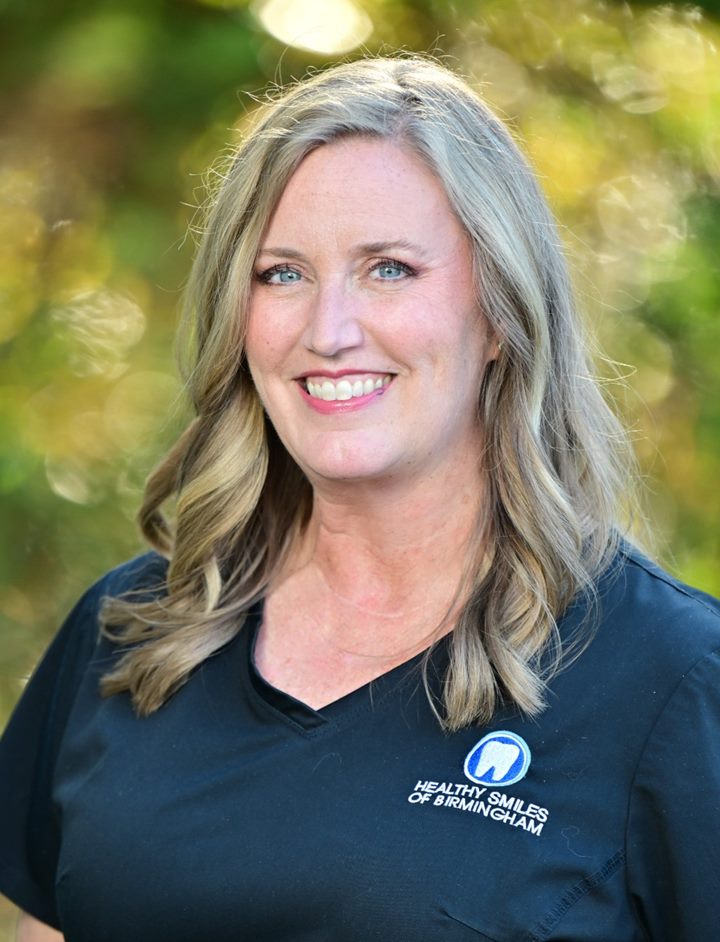
Dr. Paige Lester
What she loves most about dentistry is the feeling of truly helping a patient in need of care.
An Alabama native from Jasper, Dr. Lester earned her bachelor’s and master’s degrees in biology at the University of Alabama and her dental degree from New York University College of Dentistry. Through Sleep Better Alabama, the dental sleep division of Healthy Smiles of Birmingham, she helps patients who snore or struggle with sleep apnea, including many who could not tolerate CPAP.
- American Academy of Dental Sleep Medicine
- American Sleep and Breathing Academy
- American Dental Association · Alabama Dental Association
Treatment that fits your life and budget.
We help with the paperwork
Sleep apnea is a medical condition, so oral appliance therapy is often billed to medical insurance rather than dental. Our team will help verify your benefits before you begin.
Monthly payment options
Spread the cost of treatment into manageable monthly payments with third-party financing through Cherry, CareCredit or Sunbit.
Test in your own bed
Skip the overnight lab stay. Our Rest Assured home sleep testing service lets you complete your sleep test at home.
Serving Birmingham and the Highway 280 corridor.
Sleep Better Alabama is located inside Healthy Smiles of Birmingham at 100 Heatherbrooke Park Drive.
Patients visit us from across the Birmingham metro area, including Hoover, Vestavia Hills, Mountain Brook, Homewood, Inverness, Greystone, Chelsea, Pelham, Helena and Alabaster. With at-home sleep testing, many patients need fewer trips and less time away from work and family.
Answers, before you ask.
Still wondering if a dentist can really treat sleep apnea? You are not alone.
See all frequently asked questionsCan a dentist really treat sleep apnea?
Yes. Dentists trained in dental sleep medicine provide oral appliance therapy, a recognized treatment for snoring and obstructive sleep apnea. Clinical practice guidelines from the American Academy of Sleep Medicine and the American Academy of Dental Sleep Medicine support oral appliances for adults with sleep apnea who prefer an alternative to CPAP or cannot tolerate it.
Do I need a sleep test first?
Yes. Sleep apnea must be confirmed by a sleep test before treatment. You can test at home through our Rest Assured home sleep testing service or have an in-person study at a sleep center. Results are sent to Dr. Lester for review.
Is an oral appliance covered by insurance?
Because sleep apnea is a medical condition, oral appliance therapy is often billed to medical insurance rather than dental insurance. Coverage varies by plan, so our team will help you check your benefits before treatment begins. Monthly financing is also available through Cherry, CareCredit and Sunbit.
Is it comfortable to wear?
Most patients adjust within a few nights to a couple of weeks. Some notice mild jaw or tooth soreness at first, which usually fades. Dr. Lester fine-tunes the fit at follow-up visits.